

The Rise of Ultra-Processed Foods

Processed foods are kind of a tricky subject.
Take bread, for example, it’s a processed food, even if it’s homemade; why? Because you don’t just nibble on grains, you process them into a loaf.
Then there are the other foods you think about when you hear “processed,” things like soda, cereal, cookies, and frozen dinners. These are actually more correctly known as “ultra-processed” foods.
According to a study in the medical journal BMJ, these “ultra-processed foods,” are actually formulations of 5+ ingredients which, besides salt, sugar, oils, and fats, include food substances not typically used in culinary preparations.
We in the US and Canada, eat a lot of ultra-processed food.
In fact, according to the USDA, the typical breakdown of the North American diet includes close to 63% ultra-processed and refined foods.

How Foods Are Now Classified
1. Unprocessed or “minimally processed” foods (group 1):
Includes fruits, vegetables, and meats. Foods in this category can be processed in ways that don’t add extra ingredients. They can be cooked, ground, dried, or frozen.
2. Processed culinary ingredients (group 2):
Includes sugar, salt, and fats. If you combine ingredients in this group, for example, to make salted butter, they stay in this group.
3. Processed foods (group 3):
These are what you get when you combine groups 1 and 2, they can include things like bread, wine, and canned veggies.
Additives are allowed if they “preserve [a food’s] original properties” like ascorbic acid added to canned fruit to keep it from browning.
4. Ultra-processed foods (group 4):
These are “typically” five or more ingredients. They may be aggressively marketed and highly profitable.
Food is automatically in this group if it includes “substances not commonly used in culinary preparations, and additives whose purpose is to imitate sensory qualities of group 1 foods or of culinary preparations of these foods, or to disguise undesirable sensory qualities of the final product.”
The 4 Main Food Groups By Processing Level:

Some Facts About U/P Food:
-
- Nutritional Imposters: Ultra-processed foods aren’t just low on nutrients; many can be deceptive. They’re often stripped of genuine, healthful nutrients, only to be “fortified” with inferior, synthetic versions. This is like removing all the genuine parts from a luxury car and replacing them with cheap knock-offs.
- Sugar Landmines: Even some “healthy” breakfast cereals are sugar landmines. If you check the labels, you’ll find that many are over a 3rd sugar by weight! That is equivalent to many types of desserts!
- Toxic Cocktail: The additives list on some products reads like a high school chemistry experiment. Additives like BHA and BHT don’t belong in our bodies. They may preserve food to last longer, but they can also build up in cells creating disease.
- The Trans Fat Deception: Despite the bad press, trans fats, which are proven culprits in heart disease, still sneak into processed foods via other ingredients or names. These oils were originally meant for industrial engines so why are they in our food? The health impacts show they have ZERO business in our food.
- Sodium Shock: Some processed foods can provide more than an entire day’s worth of sodium in just one serving. While sodium is essential (in good natural forms like Celtic sea salt), in processed forms, it quickly escalates blood pressure and strains our hearts.
- Obesity’s Best Friend: The link between processed foods and obesity isn’t just coincidental. The high sugar, unhealthy fats, and empty calories in these foods directly fuel the global obesity epidemic, which leads back to drugs like Ozempic. It seems to be a cycle, doesn’t it? If that wasn’t bad enough many of the confectionary companies were, at points in the past, owned by big tobacco companies. These companies were masters of creating products that created addiction in their users. Doritos anyone??
- Hormonal Havoc: The plastics we use are still built with BPA (alternatives) and can mimic hormones in our bodies. Known as endocrine disruptors, they can interfere with everything from our metabolism to our reproductive system.
- Environmental Nightmare: Beyond health, there’s a high ecological cost. Enough said…
- Engineered Addiction: Always remember, that processed foods are crafted for addiction. The specific blend of salt, sugar, flavor additives, and fats stimulates our brains in ways that make some of us compulsively eat, even when we’re not hungry.
- Gut Warfare: There’s literally a battle in your belly and the winner of that battle determines your health, wellness, appearance, and even your mood! Ultra-processed foods have been shown to decimate the balance of beneficial bacteria in our guts. This imbalance isn’t just about digestion; it’s linked to everything from mood disorders to immune system disruptions.

Oh, & For Those Wanting To Shed Pounds…
Did you know, that in ultra-processed foods, sugar makes up an avg. of 21.1% of the calories?
In non/low-processed foods, sugar makes up only 2.4% of the calories, on average.
That’s 10x more sugar in ultra-processed foods versus non.
Keep in mind that the USDA dietary guidelines say that sugar should make up only 10 percent of your daily calories.

If we ate ultra-processed foods only occasionally, it wouldn’t be as big of a problem.
But it is…
In fact, researchers also found almost 63 percent of the calories Americans consume are from ultra-processed foods. That’s wayyyy too much…!
So if you’re eating an average American diet, chances are you’re eating too many ultra-processed foods and those foods are adding way more sugar to your diet than you would expect.
You don’t expect, for instance, just 1 serving of frozen store-bought lasagna will contain 2 full teaspoons of sugar!
Neither would you expect that a snack-pack portion of applesauce contains six teaspoons of sugar when homemade applesauce doesn’t need any added sugars to be sweet and delicious.
If you’re looking to shed pounds, just decreasing the ultra-processed foods you eat, even the ones that you wouldn’t normally associate with sugar, can really help you achieve your goal.
That’s why so many whole food-based diet plans work over time, nothing else is needed!

Toxin Build Up Over Time = Disease
👉 A 2020 study conducted in France showed people who increased their daily intake of ultra-processed food by just 10 percent increased the risk of developing overall cancer by 12 percent and breast cancer by 11 percent.
Seems like a pretty strong relationship between the two.
This could be due to the fact that ultra-processed foods have many additives that have carcinogenic properties.
For instance, titanium dioxide is commonly used as a whitening agent or in food packaging to improve food’s texture.
Yes, studies show clearly that titanium dioxide creates lesions in the colon or gastrointestinal inflammation.
Also, the high temperatures used to process these foods can create completely NEW types of toxins!
Another reason that disease and cancer risks rise so much, is that these types of food contain much high levels of sodium, sugar, and fat.
Those ingredients drive obesity, which leads to a greater risk of cancer.
👇

The Stuff To Really Toss:
☠️ Really Consider Avoiding:
- Frozen dinners (yes, that includes pizza),
- All sodas (even diet!)
- store-bought cakes and cookies (goodbye Fudgeo’s)
- Boxed cake mixes – if your great-grandmother wouldn’t recognize it as a food, it probably isn’t
- Jellied Candies – the sugar, dies and oils are literally little drops of insulin resistance
⚠️ Once In A While:
- Some jarred pasta sauces (especially white sauces)
- Sausage/preserved meats
- Store-bought salad dressings tend to be terrible too, as they’re made with primarily seed oils
➕ Add More of:
- Extra virgin olive oil
- Meats (ideally hormone-free)
- Plain yogurts/cheeses/dairy
- Eggs (ideally free-range, organic)
- Butter
- Organic frozen vegetables and fruit, tend to cost much less than the fresh version, and you can eat at your pace, not mother nature’s.
➕➕➕ Eat Way More of:
- Fresh organic fruit
- Wild-caught fish
- Grass-feed, local beef
- Pasture eggs
- Free-range, local chicken
The Optimal “What To Eat” List:

Make The Shift From Ultra-Processed:
👇
👉 1. Make Gradual Changes
While it’s tempting to make drastic changes, you and your family have a better chance at sticking to healthy habits if you decide on smaller, simpler changes over time and see them through.
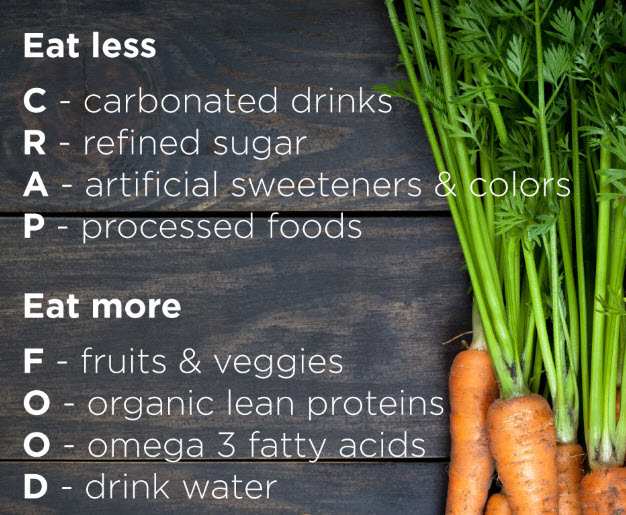
For example, if you usually drink soda or juice with meals, try replacing it with water instead.
After a few days, replace another glass. Not only will this help ease you into changes mentally, but it’ll also help reduce any physical symptoms you might experience.
👉 2. Shop With a List
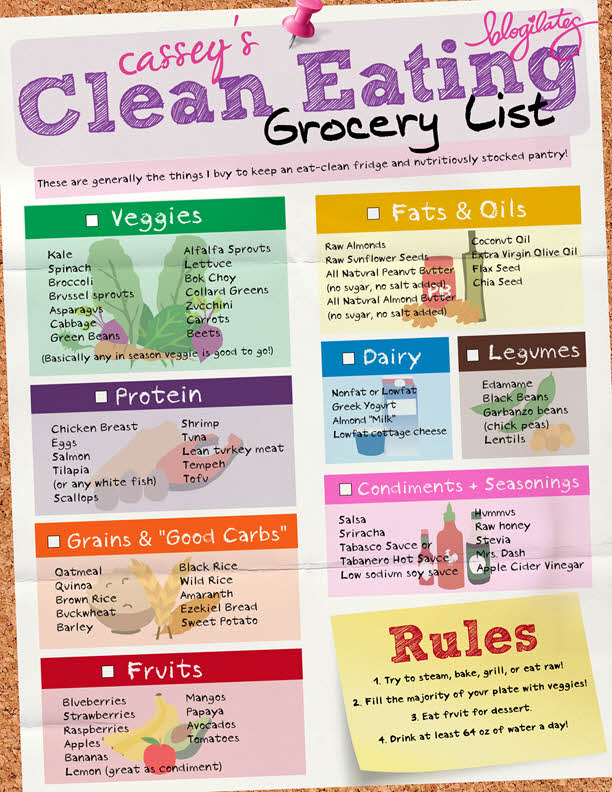
It’s a lot easier to make healthy choices and avoid ultra-processed foods when you have a list of the items you’re looking for. Make a list of the meals you’re preparing for the week and all the ingredients required.
This is a great example of a less-processed grocery list from Casey Sologilates, a famous whole-food nutritionist.
And if you’re thinking of heading to the store without eating, forget about it.
Shopping on a full stomach will make it harder to resist those foods you should avoid.
👉 3. Shop The Perimeters
You’ve probably heard it before, but there’s a reason it’s advised that you shop the edge of the store and skip most of the middle aisles.
Fresh produce, meats, and dairy are nearly always around the store perimeter, while ultra-processed foods get stacked on the shelves in the middle of the store. By limiting the aisles you shop, you may resist the temptation to purchase bad-for-you foods. In the end, it all comes down to desire and discipline.

👉 4. Read Labels More
Simple rule, if there’s something on the ingredient list that has a name you can’t even pronounce – it’s probably highly processed.
many people are scared of reading labels, but it’s not that hard. Here’s a quick down low:

And… Don’t forget, ingredients are listed in the order of how prevalent in a food they are.
Beware of what’s listed as one of the first five ingredients, or better yet, try and avoid foods that have more than five ingredients in them.
👉 5. Again, Look Out for Sugar!
Food manufacturers have gotten very smart about how sugars are listed by using different terms for the substance in the ingredients list.
Like ingredients ending with “ose” ie sucrose, fructose, and dextrose, they are sugars.
Also, fancy or “natural” sounding sugars – cane sugar, beet sugar, cane juice, fruit juice, and maple syrup are all still sugars.
Some like Xylitol may be processed differently but can still impact your tummy, and are deadly for dogs.

The 5 Worst of The Worst:
👇
⛔ Potato Chips:

Say no to those artificially colored, deep-fried potato chips with zero nutritional value that drive obesity and heart disease.
Potato chips, when fried or baked at high temperatures, produce a chemical called “acrylamide”.
Classified by the International Agency for Research on Cancer (IARC) as a “probable human carcinogen,” which is “political speech” for “we know it helps promote cancer”.
Acrylamide forms from sugars and amino acids during high-heat cooking. So, that golden-brown crispiness of your favorite chips might come with a side of potential cancer risk.
⛔ Frozen Pizza:

For a food that requires so little to make, frozen pizzas are loaded with preservatives, additives, and unrecognizable ingredients.
Did you know that some popular frozen pizzas, when consumed entirely, can pack in over 2,000 calories?
That’s the full recommended daily caloric intake for many adults, all in one pizza sitting! Factor in the saturated fats, sodium, and processed ingredients, and that seemingly innocent dinner option can swiftly become a dietary disaster.
Instead of keeping a stash in the freezer, try keeping pitas in the freezer, and when wanting some ‘za’ defrost, add some fresh tomato sauce, some cheese, and ingredients of your choice, bake for 8 mins at 400 degrees F & boom!
You’re cutting toxins, sugars, and poor-quality fats, but increasing flavor, texture, and how much better you’ll feel after.
⛔ Sodas & Most Juices:

Remember, a single 12-ounce can of soda can contain up to 10 teaspoons of sugar. That’s beyond many health recommendations for daily sugar intake!
This anti-inflammatory green juice will boost your body’s natural defenses, while my orange carrot ginger juice is a crowd-pleaser amongst kids – the only difference they’ll notice is how much better this juice tastes.
⛔ Cakes & Cookies:

Many store-bought cookies and cakes are loaded with preservatives (toxins) to extend their shelf life, along with an excessive amount of sugars and unhealthy fats.
These toxins then can also become whole new complex toxins after having been baked. Betty Crocker may have actually been a chemical scientist ;).

👇
The Bottom Line
Ultra-processed foods are engineered to be addictive and over time wreak health. That’s the simple and clear truth.
Also an inconvenient observation, it seems that the food industry and the medical industry work together to create a cycle where people are addicted to these bad foods, and over time, as disease prevalence grows, they become life-long patients (customers) of the medical complex. Nice racket!
Then, when you look at who owns the biggest portion of these public companies, you see that many of the large asset holders are the same entities. So would this type of very subtle collusion, actually be so shocking?
Yet today, most of us get most of our calories from these types of foods.
But, by actually understanding the REAL RISK to your health and body, then by making small, incremental changes, you can help significantly reduce the hold of ultra-processed foods in your life.
If you cant make changes based on where you’re at in your life, at very least, start taking pure MSM daily to remove toxins from cells and tissues, drink lots of clean water, and try to eat as balanced as you can.
As always, to your wellness!
Happy Body
Sources & References
-
Monteiro, C. A., Cannon, G., Levy, R., Moubarac, J. C., Jaime, P., Martins, A. P., … & Baraldi, L. G. (2016). NOVA. The star shines bright. “World Nutrition”, 7(1-3), 28-38.
- Introduced the NOVA food classification system, which groups foods based on their extent of processing. This paper highlighted how ultra-processed foods are nutritionally imbalanced and linked to various health problems.
-
Hall, K. D., Ayuketah, A., Brychta, R., Cai, H., Cassimatis, T., Chen, K. Y., … & Fletcher, L. A. (2019). Ultra-processed diets cause excess calorie intake and weight gain: an inpatient randomized controlled trial of ad libitum food intake. “Cell metabolism”, 30(1), 67-77.
- Found that participants given ultra-processed diets consumed more calories and gained more weight than when given unprocessed diets.
-
Tavares, L. F., Fonseca, S. C., Garcia Rosa, M. L., & Yokoo, E. M. (2012). Relationship between ultra-processed foods and metabolic syndrome in adolescents from a Brazilian Family Doctor Program. “Public Health Nutrition”, 15(1), 82-87.
- Observed a relationship between higher consumption of ultra-processed foods and an increased risk of metabolic syndrome in adolescents.
-
Schnabel, L., Kesse-Guyot, E., Allès, B., Touvier, M., Srour, B., Hercberg, S., … & Julia, C. (2019). Association between ultra-processed food consumption and risk of mortality among middle-aged adults in France. “JAMA internal medicine”, 179(4), 490-498.
- Revealed a significant association between ultra-processed food intake and higher overall mortality risk.
-
Mendonça, R. D., Pimenta, A. M., Gea, A., de la Fuente-Arrillaga, C., Martinez-Gonzalez, M. A., Lopes, A. C., & Bes-Rastrollo, M. (2016). Ultraprocessed food consumption and risk of overweight and obesity: the University of Navarra Follow-Up (SUN) cohort study. “The American journal of clinical nutrition”, 104(5), 1433-1440.
- Reported that higher consumption of ultra-processed foods was associated with a higher risk of overweight and obesity.
-
Rauber, F., da Costa Louzada, M. L., Steele, E. M., Millett, C., Monteiro, C. A., & Levy, R. B. (2020). Ultra-Processed Food Consumption and Chronic Non-Communicable Diseases-Related Dietary Nutrient Profile in the UK (2008–2014). “Nutrients”, 10(5), 587.
- Demonstrated that ultra-processed food consumption was associated with detrimental nutrient profiles related to chronic non-communicable diseases.
-
Fiolet, T., Srour, B., Sellem, L., Kesse-Guyot, E., Allès, B., Méjean, C., … & Hercberg, S. (2018). Consumption of ultra-processed foods and cancer risk: results from NutriNet-Santé prospective cohort. “BMJ”, 360.
- Indicated an association between increased intake of ultra-processed foods and higher risks of overall cancer, specifically breast cancer.
-
Steele, E. M., Baraldi, L. G., Louzada, M. L. D. C., Moubarac, J. C., Mozaffarian, D., & Monteiro, C. A. (2016). Ultra-processed foods and added sugars in the US diet: evidence from a nationally representative cross-sectional study. “BMJ open”, 6(3), e009892.
- Presented data on how ultra-processed foods represent a significant proportion of the US diet and contribute overwhelmingly to added sugar intake.
-
Silva Meneguelli, T., Viana Hinkelmann, J., Hermsdorff, H. H. M., Zulet, M. Á., Martínez, J. A., & Bressan, J. (2020). Food consumption by degree of processing and cardiometabolic risk: A systematic review. “International Journal of Food Sciences and Nutrition”, 71(6), 678-692.
- A systematic review that summarized the evidence about the relationship between food consumption by the degree of processing and cardiometabolic risk factors.
-
Kim, H., Hu, E. A., & Rebholz, C. M. (2019). Ultra-processed food intake and mortality in the USA: results from the Third National Health and Nutrition Examination Survey (NHANES III, 1988–1994). “Public health nutrition”, 22(10), 1777-1785.
- Found a significant association between higher intake of ultra-processed foods and increased risk of mortality in the US population.
Note: When interpreting these studies and their results, it’s important to consider the entire body of evidence, the study design, and potential confounding factors. Always consult with healthcare and nutrition professionals before making significant dietary changes.


Sale Details:
⚡ Ending in 72 Hours⚡
Get Up To 45% off on Multi Packs OR Save An Extra 10% Off Any of Our Already Discounted Bundles!
Just Apply Promo Code: 👉 well10👈 at Checkout 🛒
Shop Now

Shop USA Store

All Orders Ship From Our California Warehouse
Shop Canada Store

All Orders Ship From Our Toronto Warehouse
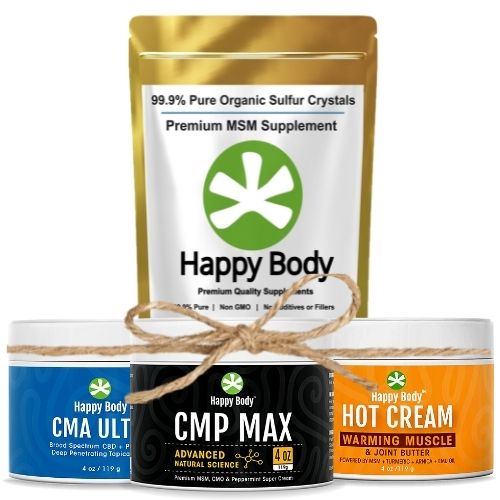
Happy Body Bundles
Try Different Product Bundles & Save Up To 53% With Free Shipping!

*Note some products are not available in Canada at this time
Shop Bundles USA
Shop Bundles Canada
Disclaimer: Information presented on this site is of a general nature used for educational and information purposes only. Statements or opinions about products and health conditions have not been evaluated by the US Food and Drug Administration or Health Canada. Products and information stated herein are not intended to diagnose, treat, cure, or prevent any disease or condition. If you have any concerns about your own health or are wanting to use a new mineral supplement, vitamin or herbal supplement, you should always consult with your physician or other healthcare professional first. Do not use information on this site or on our social media pages as a replacement for validated medical information / opinion, or as a basis for self-diagnosis. This is the same for your pet; always consult with your veterinarian before starting your pet on any new pet supplement or vitamin first.
Pricing: For our website and catalog, the Regular (Reg) Price is also referred to as the MSRP is the “Manufacturer’s Suggested Retail Price.” The MSRP is understood to mean the price at which a manufacturer will recommend a retailer or reseller to sell a product for in stores, on the internet, or in catalogs. For Happy Body Store/Happy Body/HappyBody branded items, the MSRP is calculated based on a varying percentage above the product’s completed production price & associated administration, marketing & logistics. Prices can change at any time for any reason. Pricing & sales offers can change at any time without notice, and at our sole discretion.