

Alkaline Water:

Uncovering Its Magic for Optimal Health and Wellness
Water is truly life, so today, we dive into its depths why standard tap water can be very detrimental to overall health, and which forms of water are best for you, your body and even your mental wellness!
👇
Water: The Source of Life…
10 Cool Facts About Water:

1. Water makes up about 60% of an adult’s body weight.
2. The human brain is approximately 75% water.
3. A lack of water, leading to dehydration, can cause fatigue, confusion, and even mood swings.
4. Not all hydration is created equal – depending on its source and quality, water can either support your health or harm it.
5. The actual sources of base water we drink today have likely been around in one form or another since dinosaurs roamed the earth, thanks to the water cycle.
6. Hot water actually freezes faster than cold water, a phenomenon known as the “Mpemba” effect.
7. Water can exist in three states at once: solid, liquid, and gas. This rare phenomenon called the triple point, can occur at a specific temperature and pressure.
8. Our blood is more than 90% water.
9. Regular water intake has also been shown to boost metabolism by up to 30%, and helps maintain healthy skin.
10. Adequate hydration can also help manage and prevent chronic illnesses like kidney stones and hypertension.

Let’s Start With Tap Water:
A Cocktail of Concerns

Before we dive into some powerful forms of drinking water, we need to first cover how typically terrible tap water is, and why it actually could be silently destroying your health.
With the advent of indoor plumbing, tap water has become a staple in our daily lives.
Yet, there’s more to the tap water flowing from our faucets than meets the eye.
In fact, the U.S. and Canada, despite strict regulations, have tap water filled with contaminants that, over time, pose serious health risks.

Example: Fluoridation, a process intended to “promote” dental health, has become a subject of massive controversy due to potential negative health effects.
While fluoride “may” help with tooth decay, we DO know that general intake can lead to issues like fluorosis, bone disorders, and many serious neurological conditions.
The Natural Resources Defense Council (NRDC) reports that approximately two-thirds of Americans have fluoridated tap water.
A new study also confirms that fluoridated water does indeed reduce IQ.
Chlorine, another common additive in tap water, acts as a disinfectant to kill harmful microorganisms. However, it can react with organic matter in water to produce disinfection by-products (DBPs) such as Trihalomethanes (THMs) and Haloacetic acids (HAAs), which have been linked to cancer and reproductive problems.
Beyond these additives, tap water can also contain other contaminants.
According to the Environmental Working Group (EWG), from 2010 to 2015, nearly 19,000 public water systems in the U.S had lead levels above 3.8 parts per billion (ppb), a level associated with an increased risk of lead poisoning in formula-fed infants.

Some Shocking Tap Water Facts:
👇
- In 2009, a three-year study by EWG found 316 contaminants in U.S. tap water, 202 of which had no enforceable safety limits.
- Legal ≠ Safe: According to the same study, over half of the detected chemicals were within legal limits but above levels posing health risks.
- Unregulated Threats: The NRDC reports that more than 100,000 people could get cancer due to contaminants in tap water.
- Sewage in the System: Each year, American public water systems experience over 240,000 water main breaks, which can allow bacteria, sewage, and other contaminants to enter our supposedly clean water supply.
- Cryptosporidium Chaos: This microscopic parasite found in contaminated water was responsible for over 4,000 outbreaks of illness in the U.S. between 2009 and 2017.
- Aging Infrastructure: According to a report by the American Water Works Association, most of the U.S.’s drinking water infrastructure is nearing the end of its useful life, raising concerns about future water safety.
- Plastic in the Pipeline: A 2019 study found that 94.4% of tap water samples from the U.S. contained plastic fibers, with an average of 9.6 fibers per liter.
- This information isn’t to scare you but rather to emphasize the importance of being aware of what’s in our tap water. To ensure the water you’re consuming is safe, consider having your water tested, particularly if you live in an area with older infrastructure, and explore filtration options suited to your specific needs. As the old saying goes, better safe than sorry!

Different Ways To Get Around Tap Water:
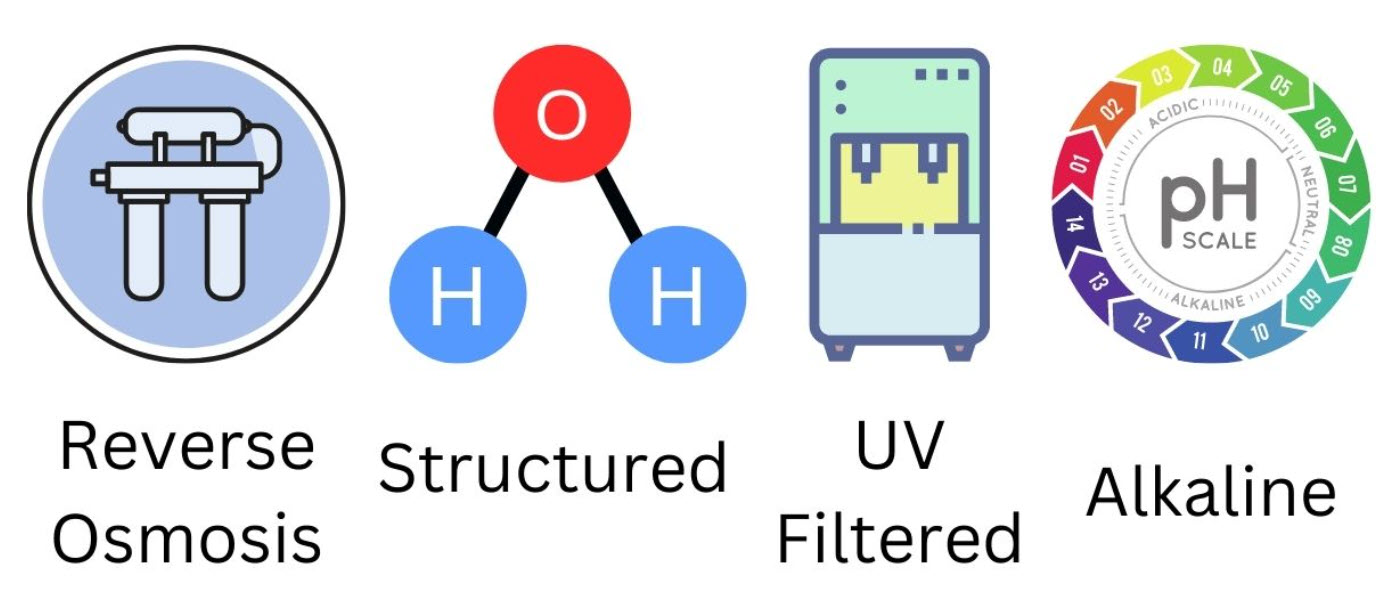
1. RO (Reverse Osmosis) Water

Initially developed in the late 1950s to desalinate water, RO technology’s ability to filter out impurities was swiftly leveraged in industries, such as printing, where clean water was crucial.
RO works by pushing water through a semipermeable membrane, which allows water molecules to pass but blocks the majority of dissolved solids, organic, inorganic and bacterial contaminants.
This separation is so effective that RO can filter out particles as small as ions, hence, its extensive use in water purification.

Interesting fact, did you know that RO technology is so proficient at removing impurities that it is used in producing not just drinking water but also ultra-pure water for laboratory testing and even for the electronic industry, where the water used has to be as close to 100% H2O as possible?
Benefits of RO Water:
1. Improved Taste: RO filtration removes substances that cause taste and odor problems, such as chlorine and bacteria, giving water a cleaner, fresher taste.
2. Removal of Contaminants: This includes harmful chemicals like lead, arsenic, nitrates, and much more. It can remove up to 99% of dissolved solids, bacteria, and chemicals, making it incredibly effective against waterborne diseases.
3. Removes Fluoride: The semi-permeable membrane in an RO system is capable of filtering out smaller particles, including fluoride ions. It’s estimated that RO systems can remove between 85% and 92% of fluoride, although this can vary based on specific system design and water conditions.
4. Ease of Maintenance: Once installed, RO systems require only periodic filter changes and system checks, making them very simple and cost-effective to operate.

Potential Downsides of Reverse Osmosis:
1. Loss of Beneficial Minerals: The RO process may also remove beneficial minerals from water, including those beneficial to health such as calcium, magnesium, and potassium, which are essential for bone health, heart health, and nerve function. There are some RO units today that actually remineralize water after initial filtering.
2. Waste of Water: For every gallon of purified water, an RO system generates several gallons of wastewater, which may raise environmental and cost concerns.
3. Potential for Bacteria Growth: Without proper maintenance, the RO membrane can harbor bacteria, negating its benefits.
4. Slightly Acidic Water: RO water is often slightly acidic (pH less than 7) which may have potential long-term health effects if used as the main source of hydration.

2. Structured Water: An Intriguing Hydration Mystery

Structured water, also referred to as hexagonal water, clustered water, or living water, is a concept that’s sparked intrigue, skepticism, and considerable interest in the world of natural wellness.
Despite its controversial standing, the fascinating properties attributed to this type of water continue to fascinate researchers and health enthusiasts alike.

Understanding Structured Water
Water, in its pure form, consists of H2O molecules floating around independently. However, under certain conditions, these individual molecules can organize themselves into a more structured arrangement, forming hexagonal clusters. This phenomenon underpins the concept of structured water.

Noteworthy is the fact that structured water is a common occurrence in nature. It’s believed to be the form of water found within living cells, where the water molecules arrange themselves around proteins and other biomolecules, effectively influencing cell behavior and biological functions.
Benefits of Structured Water:
The health benefits attributed to structured water are primarily based on its supposed bioavailability or the ease with which our bodies can absorb and use it. Here are some of the touted benefits:
1. Enhanced Hydration: Advocates claim that the hexagonal structure allows water to penetrate cells more easily, leading to superior hydration.
2. Improved Nutrient Absorption: The structured water’s high bioavailability is believed to assist in better nutrient absorption, potentially boosting overall health.
3. Detoxification: Some proponents suggest that structured water can help to remove toxins from the body more efficiently, owing to its improved cell penetration.
4. Increased Energy Levels: Due to enhanced hydration and nutrient absorption, some individuals report feeling more energized after consuming structured water.

Potential Downsides of Structured Water:
Some skepticism surrounds structured water, largely due to a lack of comprehensive scientific studies.
The available research primarily involves in-vitro studies, and more extensive clinical trials are needed to confirm the potential benefits.
Another downside is the cost involved.
Devices claimed to structure water can be quite expensive, and without concrete evidence, it’s challenging to justify the investment.
Creating Structured Water at Home
Several methods are purported to create structured water at home:
1. Water structuring devices: These range from vortex machines that spin water to replicate natural river flows, to devices that use magnetic or infrared technology. Brands like Natural Action Technologies and UMH offer such devices, but they can be costly.
2. Natural methods: Swirling water in a glass or running it over specific types of rocks or minerals is believed by some to structure water, mimicking the natural occurrence in streams and rivers.
3. Consuming water-rich foods: Since structured water is believed to be present in living organisms, consuming water-rich fruits and vegetables is another way to increase your intake.

3. UV Filtered Water:
Harnessing Light for Purification

One of the more popular methods of water purification uses Ultraviolet (UV) light.
This technology, while not new, has seen a significant rise in popularity for both residential and commercial use due to its effectiveness and simplicity.
Understanding UV-Filtered Water
UV filtration is a water purification method that uses UV-C light to deactivate harmful microorganisms, effectively preventing them from reproducing and causing illness.
The process does not involve chemicals or heat, nor does it alter the taste, pH, or other properties of the water. It’s a purely physical process that’s both eco-friendly and extremely effective.
An intriguing fact about UV filtration is that it’s been used for over a century, with the first known use dating back to 1910 in Marseille, France. Today, it’s used in various industries, including hospitals, laboratories, and even space stations, to provide safe drinking water.

Benefits of UV-Filtered Water
1. Effective Against a Broad Range of Microorganisms: UV light can neutralize many types of pathogens, including bacteria, viruses, and cysts, that can contaminate water and cause diseases.
2. 100% Chemical-free: As UV filtration doesn’t use any chemicals, it’s an environmentally friendly option. It also means the water doesn’t have any added taste or smell, which can occur with chlorine disinfection.
3. Easy and Safe to Use: UV systems are typically compact and easy to install, and the process is safe as it doesn’t create harmful by-products.

Potential Downsides of UV-Filtered Water
1. Does Not Remove Non-living Contaminants: UV filtration only neutralizes living organisms. It doesn’t filter out chemicals, heavy metals, or other non-living impurities. This limitation means that UV filtration is best used in combination with other filtration methods, such as RO or activated carbon filters.
2. Water Clarity is Crucial: UV light can’t penetrate cloudy or turbid water effectively. Pre-filtration may be necessary to ensure the water is clear enough for the UV light to work efficiently.
3. Electricity Dependent: Since UV filtration requires an electric light source, it might not be the best option for areas with unstable power supply.

UV-Filtered Water at Home
There are numerous UV water filtration systems available for home use, ranging from under-sink models to whole-house systems. Some popular brands include SteriPen, Aquasana, and Pelican Water Systems.
The cost can range from around $100 for a small, portable device to $800 or more for a comprehensive home system.
Installing a UV filter at home can be a DIY project for the more technically inclined, but professional installation might be preferred for whole-house systems. Maintenance mainly involves periodically replacing the UV bulb to ensure it remains effective.
In summary, UV filtration provides a compelling, eco-friendly option for water disinfection. While it does have some limitations, when combined with other filtration methods, it can contribute to a comprehensive home water purification system. As always, understanding your specific water quality needs is the key to choosing the best options for your health and wellness journey.
But there is also one more form of water that may be best – Alkaline Water…
4. Alkaline (Kangen) Water

pH Balance: The VItal Cog for Good Health:
To appreciate alkaline water, we must first understand the importance of pH balance.
The pH scale ranges from 0 to 14; anything below 7 is acidic, above is alkaline, and 7 is neutral.
5 interesting facts about pH balance:
1. The human body operates best when the internal environment is slightly alkaline, around 7.4.
2. An overly acidic condition, called acidosis, can affect cellular function, leading to serious health problems – including some forms of cancer.
3. The Western diet rich in processed foods can contribute to chronic low-grade acidosis, linked to health issues like obesity and type 2 diabetes.
4. Many medications/supplements also work more effectively in an alkaline environment.
5. Regular pH balance checks can provide early indications of potential health issues. Alkaline water, with a pH level of around 8 to 9, can help in maintaining this balance, preventing your body from pulling necessary minerals like calcium from your bones.

Alkaline Water:
Better Health Through Hydration

Alkaline water is created by adjusting the water’s pH level, usually through a process known as electrolysis.
During electrolysis, water passes over positive and negative electrodes, dividing it into acidic and alkaline components.
The alkaline part is what we consume, this is also known as “Kangen” water.
Reaping the Benefits of Alkalinity
Here’s how alkaline water, teeming with essential minerals like calcium, potassium, and magnesium, can help our health:
- Hydration: Alkaline water’s smaller molecular clusters allow for better absorption, promoting superior cellular and overall hydration.
- Antioxidant Properties: With active hydrogen and negative oxidation-reduction potential (ORP), Kangen water acts as a liquid antioxidant that neutralizes harmful free radicals.
- Detoxification: Alkaline water can assist in flushing out the acidic waste that accumulates in our bodies from metabolic processes and external toxins.
- Metabolism and Energy: Alkaline water potentially enhances gut health and nutrient absorption, boosting metabolism and energy levels.
- Bone Health: Consuming alkaline water can reduce the body’s need to draw from its alkaline mineral stores in bones, thereby promoting bone health.
- Healthy Aging: Alkaline water’s antioxidant properties can combat oxidative stress, implicated in the aging process.

Balancing the Tide:
Potential Downsides of Alkaline Water
- As with anything, overconsumption of alkaline water can lead to conditions like metabolic alkalosis, characterized by an excess of base (alkali) in the body.
- Too much alkaline water can also potentially reduce stomach acidity, hindering digestion and the absorption of certain nutrients.
- Too much alkaline water (or too high a pH) can also strip minerals from the body. This can be a big issue as trace minerals are also vital for proper health and function.
Overall though, issues related to too much alkalinity are mostly rare. With all things balance is key, water is no different.
So, if you use only alkaline water, you may want to fine-tune pH to be just slightly more alkaline versus other forms of water.
Homemade Alkaline Water: A Quick Guide
Creating alkaline water at home can be as simple or as complex as you want it to be. A few common methods include:
- Water Ionizers: These machines use electrolysis to create alkaline water. Renowned brands such as Kangen, Aqua Ionizer Deluxe, and Life Ionizers produce units ranging from $500 to over $4000.
- Alkaline Water Filter Pitchers: These are affordable, and portable and also add minerals to the water to increase its alkalinity. Some popular brands are Invigorated Water and Ehm Ultra.
- Alkaline Water Sticks or Drops: These are mineral sticks or concentrated solutions that you stir into your water to make it alkaline. They are affordable but offer less control over the resulting pH level.
- Baking Soda: Adding half a teaspoon of baking soda to a gallon of water can increase its alkalinity. However, it’s sodium-rich and may not be suitable for those with high blood pressure.

Bottom Line
Navigating the sometimes ‘murky’ waters of finding pure, uncontaminated hydration can be a serious challenge.
Yet, with the right information, you can find an option that both meets your needs and boosts your wellness.
From the high-tech solution of reverse osmosis to UV-filtered water, to the simple harmony of nature’s structured water, we have a myriad of choices.
But, the strongest contender in this lineup seems to be alkaline or Kangen water. This mineral-infused powerhouse is more than just H2O. It has the potential to level our body’s pH, keep us hydrated, and amplify our overall well-being.
So, in this vast landscape of hydration, alkaline water stands tall as a potential game-changer.
By restoring/managing pH balance and nourishing our health, it’s not just a drop in the ocean, but a significant wave in the sea of wellness.
Dive in and explore this potential asset to your health and hydration routine. 
Sources & References
-
Certainly, here are some research sources and references that can be useful for this article:
1. Mayo Clinic. (2020). Alkaline water: Better than plain water? [Link](https://www.mayoclinic.org/healthy-lifestyle/nutrition-and-healthy-eating/expert-answers/alkaline-water/faq-20058029)
2. Kang, S. A., & Kim, S. K. (2016). Changes of Physiochemical and Sensory Characteristics of Alkaline Electrolyzed Drinking Water during the Storage. Preventive Nutrition and Food Science, 21(4), 362–367. [Link](https://www.ncbi.nlm.nih.gov/pmc/articles/PMC5182486/)
3. Consumer Reports. (2018). Should You Drink Alkaline Water? [Link](https://www.consumerreports.org/water-quality/should-you-drink-alkaline-water/)
4. Food and Water Watch. (2018). The State of Public Water in the United States. [Link](https://www.foodandwaterwatch.org/sites/default/files/rpt_1810_dsp_water.pdf)
5. Harvard Health Publishing. (2019). Is there a role for drinking water to supplement dietary intake? [Link](https://www.health.harvard.edu/staying-healthy/is-there-a-role-for-drinking-water-to-supplement-dietary-intake)
6. EWG Tap Water Database. (2019). [Link](https://www.ewg.org/tapwater/)
7. Centers for Disease Control and Prevention. (2016). Community Water Treatment. [Link](https://www.cdc.gov/healthywater/drinking/public/water_treatment.html)
8. R. A. Gosselin (2021). Chlorine – Water Disinfection, To: Water Treatment Solutions. [Link](https://www.lenntech.com/processes/disinfection/chemical/disinfectants-chlorine.htm)
9. Natural Resources Defense Council. (2017). Threats on Tap: Widespread Violations Highlight Need for Investment in Water Infrastructure and Protections. [Link](https://www.nrdc.org/sites/default/files/threats-on-tap-water-infrastructure-protections-report.pdf)
10. World Health Organization. (2006). Fluoride in Drinking-water. [Link](https://www.who.int/water_sanitation_health/dwq/chemicals/fluoride.pdf)


Sale Details:
⚡ Ending in 72 Hours⚡
Get Up To 45% off on Multi Packs OR Save An Extra 10% Off Any of Our Already Discounted Bundles!
Just Apply Promo Code: 👉 well10👈 at Checkout 🛒
Shop Now

Shop USA Store

All Orders Ship From Our California Warehouse
Shop Canada Store

All Orders Ship From Our Toronto Warehouse
Happy Body Bundles
Try Different Product Bundles & Save Up To 53% With Free Shipping!

*Note some products are not available in Canada at this time
Shop Bundles USA
Shop Bundles Canada
Disclaimer: Information presented on this site is of a general nature used for educational and information purposes only. Statements or opinions about products and health conditions have not been evaluated by the US Food and Drug Administration or Health Canada. Products and information stated herein are not intended to diagnose, treat, cure, or prevent any disease or condition. If you have any concerns about your own health or are wanting to use a new mineral supplement, vitamin or herbal supplement, you should always consult with your physician or other healthcare professional first. Do not use information on this site or on our social media pages as a replacement for validated medical information / opinion, or as a basis for self-diagnosis. This is the same for your pet; always consult with your veterinarian before starting your pet on any new pet supplement or vitamin first.
Pricing: For our website and catalog, the Regular (Reg) Price is also referred to as the MSRP is the “Manufacturer’s Suggested Retail Price.” The MSRP is understood to mean the price at which a manufacturer will recommend a retailer or reseller to sell a product for in stores, on the internet, or in catalogs. For Happy Body Store/Happy Body/HappyBody branded items, the MSRP is calculated based on a varying percentage above the product’s completed production price & associated administration, marketing & logistics. Prices can change at any time for any reason. Pricing & sales offers can change at any time without notice, and at our sole discretion.